My reflections on the past year and predictions for the coming year.
Jan 06, 2026
One night I was abruptly woken up by a huge bang. The windows rattled and I burst out in shock “what the hell was that?!” Shortly afterwards I heard the sound of the police and fire brigade sirens. It felt like I was in a war zone. In the morning, I was met by the news that a entrance to a building had been blown up a couple of kilometers away and that it was part of the ongoing gang war that has plagued my hometown of Norrköping for a couple of years.
Just a few days after the incident, Minister of Justice Gunnar Strömmer announced that the police will be allowed to use real-time facial recognition using AI.1 A year earlier, permission was granted to place surveillance towers in strategic locations in Swedish cities. This reflects another dramatic year where the solution to any problem is always to tighten surveillance and control of both digital and physical spaces.
Trump’s Year as President is Disrupting the World
In the USA, Donald Trump took office as president with a disrupting agenda in which the entire geopolitical order was abruptly put to an end. Two of the most outrageous statements included thoughts of annexing Greenland and making Canada a state in the USA! Everything contributed to creating great uncertainty, not least regarding the control over NATO. An organization that Sweden joined as late as March 2024, around the same time as the (separate) defense agreement (DCA) gave American military access to Swedish defense facilities from August 2024.2
Meanwhile, Trump announced grandiose AI projects like Stargate, with Oracle’s Larry Ellison and the unofficial efficiency ministry DOGE under the leadership of Elon Musk.
Trump also announced his intention to withdraw from international agreements such as the United Nations Climate Change Agreement and the WHO Pandemic Treaty. Then the tariff war began, with the official aim of benefiting American domestic industry.
Is “Trumpmageddon” Coming?
·
January 27, 2025

The previous week has undoubtedly been one of the most tumultuous this decade. Donald Trump made a flying start as the newly elected US president and signed 22 executive orders, announced his desire to make Greenland American, take control of the Panama Canal, to release classified documents about JFK, RFK, and Martin Luther King, that the US should lea…
The G20 is Facing Changes
The G20 leadership structure means that member nations take turns hosting the G20 meetings and a leadership troika consisting of the previous, current and incoming hosts will work together to ensure a smooth transition.
Trump resolutely threw this order overboard by boycotting the G20 meeting in Johannesburg in November 2025 (officially due to South Africa’s treatment of white Afrikaners, but there may be other reasons..) and by ousting both the previous host nation, South Africa (!) and the climate threat rhetoric from the G20 agenda during the American chairmanship year that began in December 2025. Instead, Poland is welcomed as a new member while the G20 is to focus on deregulation, energy security and new technology.3 This is most likely intended to cater to the “AI beast” (digital control system and server halls) that is under construction, with energy and rare-earth metals.4
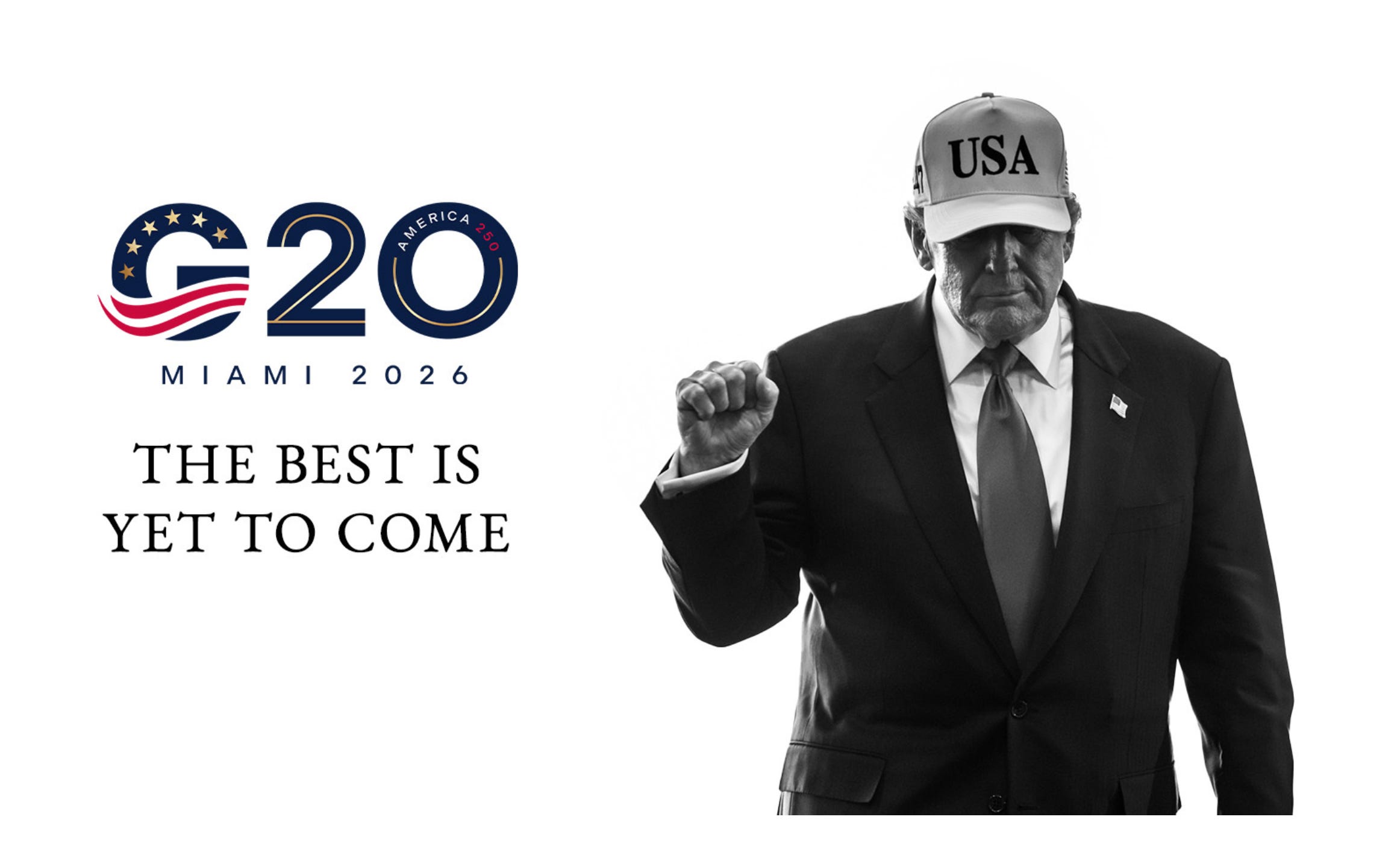
The G20 Leaders Summit in December will be held at Donald Trump’s golf resort “Trump National Doral Miami” in Florida, culminating a year of celebrating the 250th anniversary of the United States. Details are still scarce, however. The only information displayed on the G20 website is Donald Trump with a clenched fist and the text “The Best is Yet to Come.” Or should that be “The Beast is Yet to Come”?
Venezuela, Greenland, Gaza and Ukraine
On Saturday night, the US attacked Venezuela, to overthrow and capture President Nicolás Maduro. Officially to stem the flow of drugs to the US, but it also includes access to strategic resources such as oil and minerals. The threat to Greenland was also renewed when a map was published on the island with the colors of the American flag and the comment “soon” by former DOGE employee Katie Miller. This has created great disarray in international relations.
Meanwhile, a ceasefire has been reached in the Gaza war following Trump’s peace proposal, where a technocratic council (Trump’s “Board of Peace”) is intended to govern during a transitional period while the “new Gaza” is built as high-tech smart cities where all services will be provided by “ID-based AI-powered digital systems.” Gaza is intended to become a strategic hub for manufacturing, trade, data, and tourism.
Below is a vision image from “Project Sunrise” (created by Donald Trump’s son-in-law Jared Kushner and US envoy for the Middle East, Steve Witkoff).
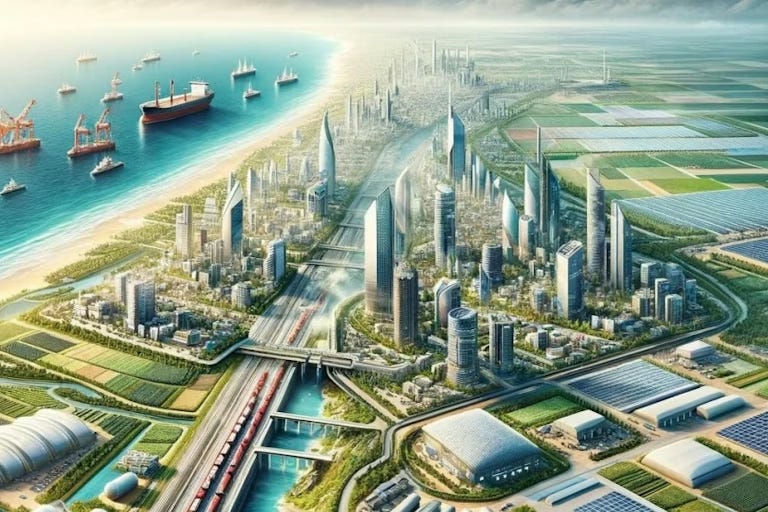
The Gaza Reconstitution, Economic Acceleration and Transformation Trust (Great Trust) vision.
In the heavily depopulated Ukraine, peace negotiations continue and an agreement is expected soon. There too, reconstruction work awaits while the “spoils of war” are divided between East and West, especially regarding access to rare-earth metals.5
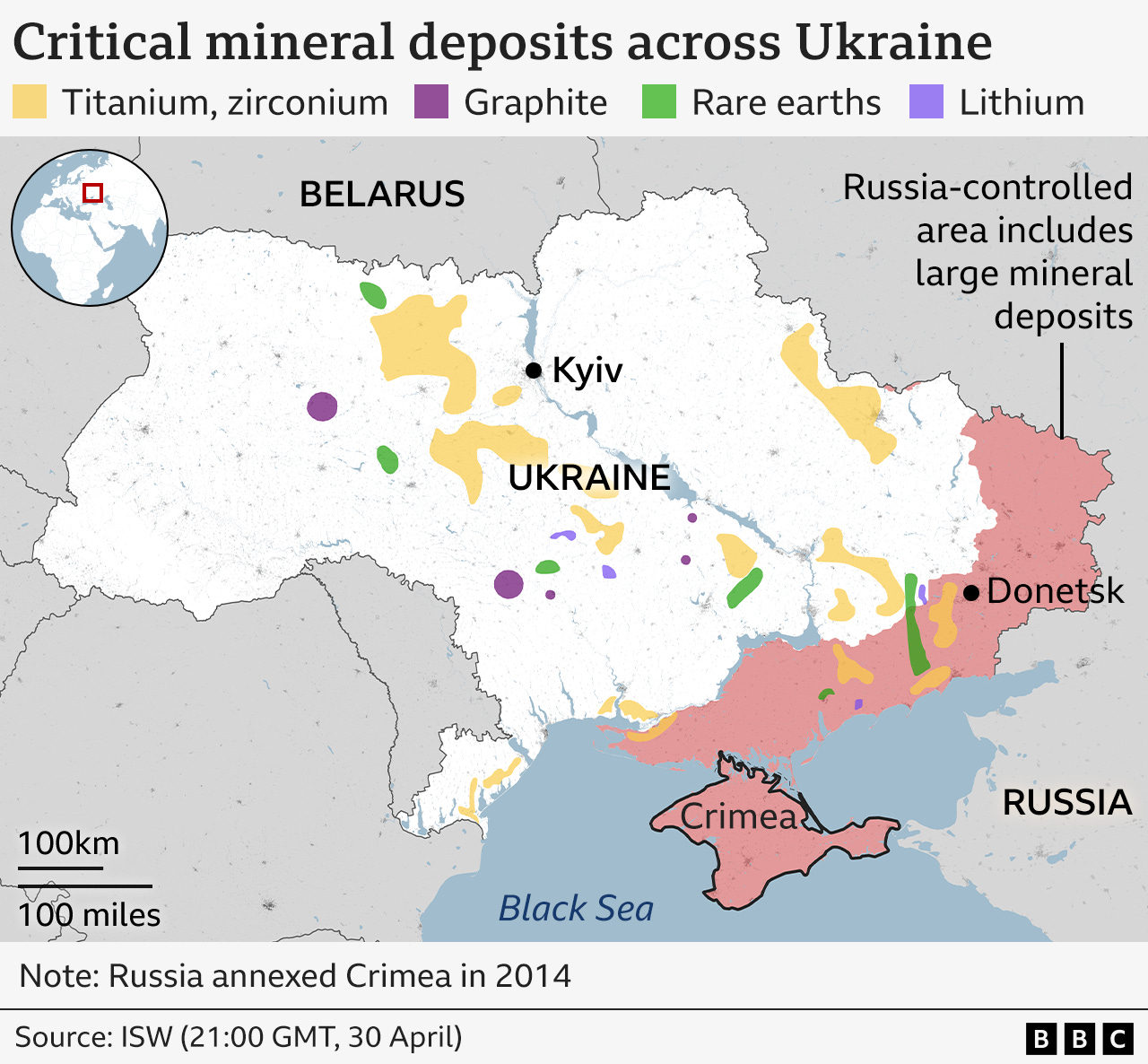
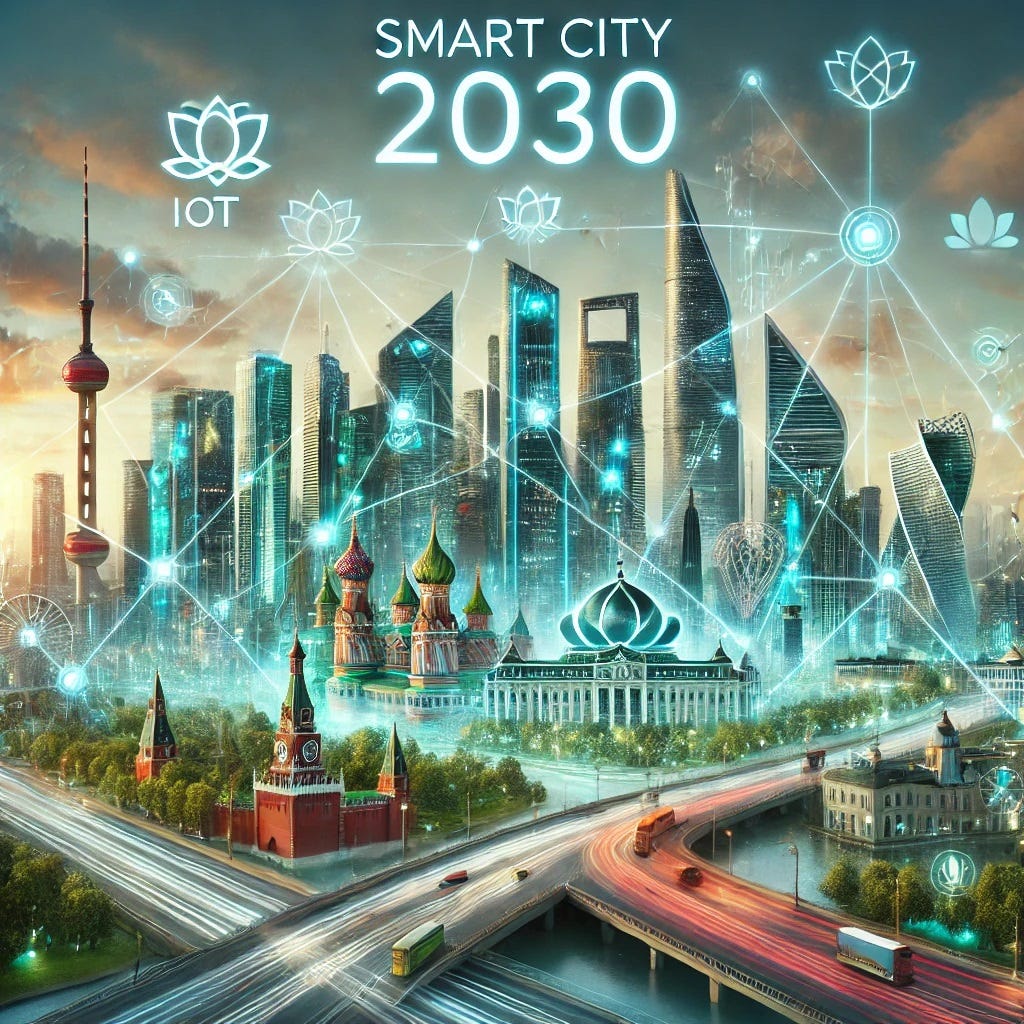
In the wake of this, new AI systems for automated political governance are being tested. As I wrote about earlier this year, World Economic Forum has launched a Global Government Technology Center in Kiev. But the technocratic control systems are being built on both sides of the conflict, as illustrated by the BRICS Smart City 2030 competition.
Welcome to Your Nightmare: The Externalization of the Agentic State
·
July 15, 2025
Global Government Technology Centre i Berlin
Great Transitions Initiative
The development has strong implications for what the Great Transition Initiative (GTI) refers to as the General Emergency, a five-year period (2023–28) in which virtually everything develops negatively on the world stage and which largely coincides with Donald Trump’s current term in office.

GTI’s director Paul Raskin (1942-), received funding from the Rockefeller Foundation, the Nippon Foundation and the United Nations Environment Programme (UNEP) in the 1990s to “illuminate global challenges and opportunities”.
This resulted in a number of scenarios about the future development where the course of events could either lead to a dystopian prison planet or a breakthrough to a sustainable utopia within the planetary boundaries. It was not an objective analysis but clearly agenda-driven (a longer account of GTI’s background and scenarios is included in my book The Global Coup d’Ètat).
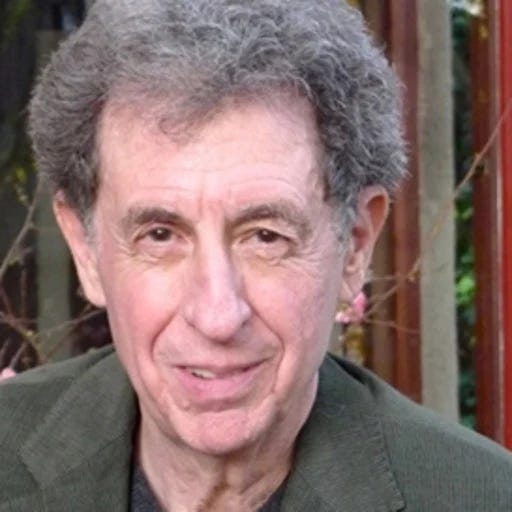
Paul Raskin (1946-). Director Tellus Institute and Great Transition Initiative
Paul Raskin is not just anyone, he was one of the authors of the Brundtland Commission’s report Our Common Future, was part of the group that developed the Earth Charter, was for many years a member of the Club of Rome and has been a lead author of the IPCC’s climate reports. He is also a world federalist and in his favorite scenario (New Paradigm) describes the emergence of a global social democratic government with a world parliament based on the concept of sustainable development.
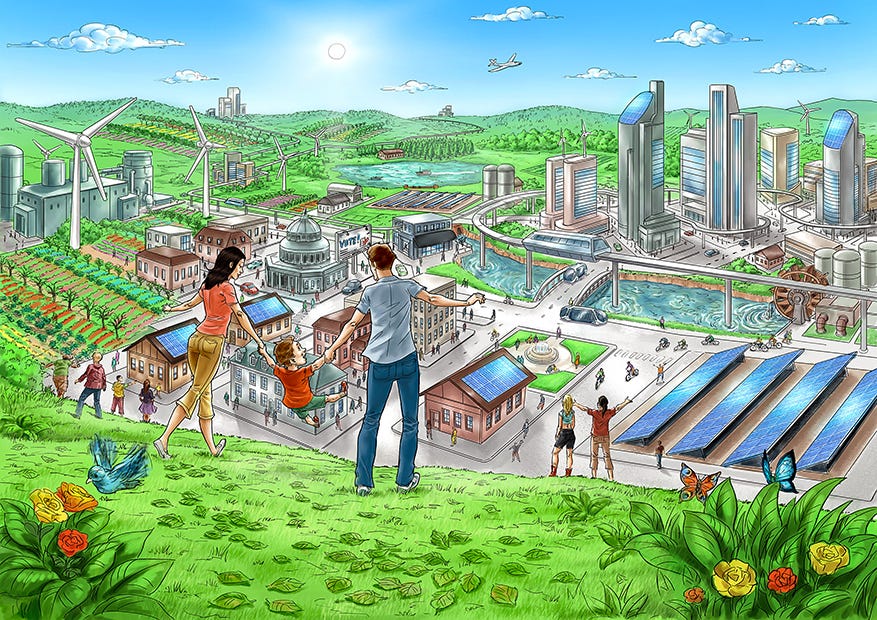
The New Sustainability Paradigm, the variant embraced by GTI, sees globalization not only as a threat but also as an opportunity to construct a planetary civilization rather than rely on the incremental forms of Conventional Worlds or retreat into localism. It envisions the ascendance of new categories of consciousness—global citizenship, humanity-as-whole, the wider web of life, and the well-being of future generations—alongside democratic institutions of global governance. (greattransition.org/new-paradigm)
Raskin recounts in his autobiographical essay “Encounters and Transitions” that a close collaboration developed between Sweden and his institute (Energy Systems Research Group) in the early 1980s.6 This occurred after a meeting with the Beijer Institute’s then director Gordon Goodman, a British ecologist who wrote the climate and energy chapter of the Brundtland Report on behalf of the Rockefeller Brothers Fund (something I describe in Rockefeller: Controlling the Game).
The collaboration (where ESRG became affiliated with Beijer) meant that his institute (renamed in 1990 to Tellus Institute) was flooded with Swedish kronor, and when the Beijer Institute was transformed into the Stockholm Environment Institute (SEI) in 1989, in close collaboration with the Social Democratic government7, he gained a “frictionless access to international sponsors and projects”.8
Co-founder of SEI was the IPCC’s first chairman, Bert Bolin, who handpicked Johan Rockström as its new director in 2004. Rockström, who now is a co-director of the Potsdam Institute and one of the architects of the Planetary Boundaries framework, shares Raskin’s world of ideas and has contributed, among other things, the essay “Bounding the Planetary Future: Why We Need a Great Transition” to the Great Transition Initiative.9
One of the first missions was the “Polestar Project”, which was launched by Raskin and Goodman in 1991 with the aim of answering the question: “what policy adjustments are needed in the near term are necessary to assure a vibrant and verdant civilization for the future?” and which resulted, just over ten years later, in the report Great Transition: The Promise and Lure of the Times Ahead.
Inspiration and early funding came from Steven Rockefeller (son of former US Vice President Nelson Rockefeller) who also chaired the committee that drafted the Earth Charter. Bert Bolin was also involved in the Great Transition-project as a reviewer.
In “Encounters and Transitions,” Raskin describes how he traveled to Stockholm in 2002 to present the report in the Old Parliament building in Stockholm in connection with the 30th anniversary of the United Nations Conference on the Human Environment in Stockholm. In the front row sat the Swedish king Carl XVI Gustaf.10
This illustrates how entrenched Raskin’s work has been within the establishment. The scenarios developed for the Great Transition have subsequently been used by the UN, OECD and IPCC.
So what will happen in the coming years according to Raskin’s analyses?
What is clear is that since the pandemic was declared in 2020, the world has increasingly entered the most dystopian path (Barbarization). Raskin writes that an “ecological, political, and cultural deterioration extrapolate toward a barbarized abyss”.11 We are in the era of polycrises. According to this pessimistic scenario, we are moving towards a situation where a global authoritarian system will take control (Fortress World) in order to try to prevent or manage a systemic collapse and the emergence of a new Dark Ages (Breakdown).
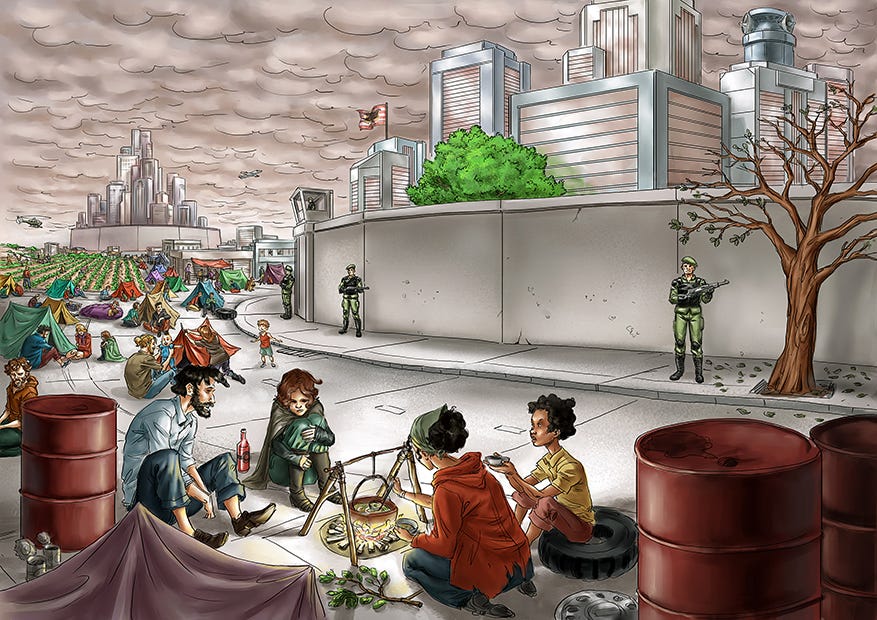
In the Fortress Worlds variant, as the systemic global crisis deepens, powerful international forces are able to impose order in the form of an authoritarian system of global apartheid with elites in protected enclaves and an impoverished majority outside. (greattransition.org/fortress-world)
As described in Raskin’s essay Journey to Earthland (an updated analysis of the Great Transition published in 2016):
As the world system hemorrhaged, the so-called NEO alliance took forceful action, anointing itself a provisional world authority, and acted with military precision to impose its self-styled New Earth Order.12
This global authoritarian regime, consisting of business leaders, powerful politicians and leading experts, with an upgraded UN as a coordinating platform, will, according to Raskin, use big data and modern surveillance technology to quell resistance and conflict. This results, according to this scenario, in a tyrannical police state that protects the interests and natural resources of the elite. We were given a taste of this during the “pandemic”, but without an overt form of global coordination.
Scenarios Don’t Have to Become Self-fulfilling Prophecies
However, I cannot see how an alliance similar to NEO could be formed in the very near future. The emergency mechanism “Emergency Platform”, which would have given the UN great power in a global emergency, was removed from the UN’s Pact for the Future at the last minute. However, it is very likely that it will return in a revised version within a couple of years. The “global crises” succeed each other and constitute a fertile ground for creating new “effective” crisis management structures.
The G20s development over the next year may provide an indication of where the world is headed. Not least when the forum’s agenda now is being revised by the American presidency, with the UK as the agenda-setting partner. After all member states have had its role as G20 host, a new cycle has begun. Already during South Africa’s presidency, the focus became increasingly oriented on securing natural resources for the expansion of the digital control systems.13 This is where the Trump administration’s priorities lie. However, this is likely to contribute to a division where not all member nations agree, or are even allowed to be included (as the exclusion of South Africa is an example of).
Election of New UN Secretary-General
The question is also who will be appointed as the new Secretary-General of the UN and what relationship the organization will have with the G20 the coming year? The term of office of the current Secretary-General António Guterres expires at the end of 2026 and the nomination process has started.14 There is a clear desire from many camps that it will be a woman who will assume the position. Candidates who have been proposed are Mia Mottley from Barbados and Rebeca Grynspan from Costa Rica.
The candidate who becomes relevant, however, must be approved by all five permanent members of the Security Council (the United States, United Kingdom, France, Russia and China), which would suggest a candidate who is more in line with the Trump administration’s agenda. My personal guess is the Director General of the International Atomic Energy Agency (IAEA), the Argentine diplomat Rafael Grossi. Russia has also expressed support for him.15
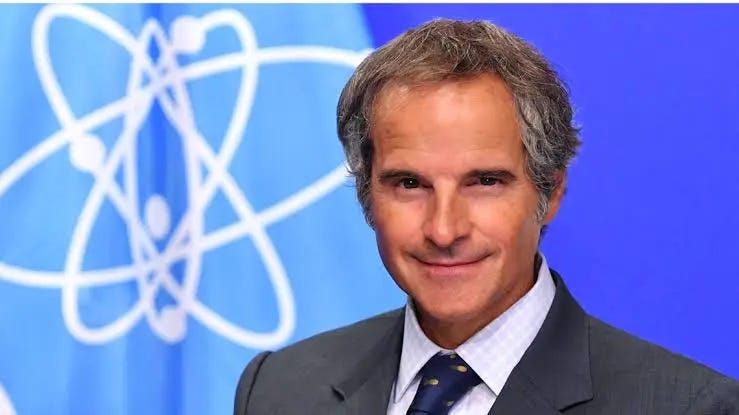
Rafael Grossi (1961–)
World Economic Forum
And what happens next with the World Economic Forum agenda? Trump, who last spoke via link, was invited to physically attend the next meeting in Davos. This time with Blackrock’s Larry Fink and Roche’s André Hoffman as hosts (after Klaus Schwab was removed as the forum’s leader after allegations of misconduct last year). This year, they address the questions of how we can cooperate in a world burdened by crises, polarization and reduced trust, and how tomorrow’s energy needs can be met.16 The solutions offered by the forum’s eleven research centers are, as usual, heavily rooted in technocratic systems thinking.
Within the next few years, the tools will be in place that could enable the “NEO” takeover and the realization of “The Agentic State” (which I discussed last year with James Corbett, Ivor Cummins and Cornelia Mrose).
As a reaction and counterbalance to the authoritarian development, according to Raskin’s scenarios, a global citizen movement arises which (in Raskin’s ideal scenario) succeeds in overthrowing NEO and its hardline agenda and instead initiates reforms that give rise to an “enlightened international governance” and where a “powerful collection of action plans, institutions and financing” is used to “achieve the ambitious goals of the old sustainability agenda”.17
This obviously refers to the realization of the Pact for the Future (which was negotiated by the UN member states in 2021–2024) but which, due to Donald Trump’s accession to power, is not yet implementable in all its parts (however, the digitalization agenda is largely on track). The Pact can only be implemented when the old order has fallen (which seems to be the task of “Wreck-it-Trump”).
According to Raskin’s predictions, the hard-line world authority will eventually be replaced (through popular protests) by a more “benevolent” one. This will ultimately lead to the establishment of a global Social Democracy with a World Constitution and a World Parliament (“the Commonwealth of Earthland”). A global problem (global digital dictatorship) will be addressed by a global solution (global Social Democracy). Raskin has set the establishment of “Earthland” at 2048. Interestingly, this is the 200th anniversary of the Communist Manifesto.
Parallels can also be drawn to neo-theosophist Alice A. Bailey’s new world order where the so-called “hidden masters” emerge on the world stage to create a utopian kingdom of peace under the leadership of “The Christ” (which I discussed in the Omniwar symposium in October and in my book Temple of Solomon). There is also the relationship to the Roundtable Group network.
We will undoubtedly experience a number of dramatic years as the old system is broken down to be replaced by the new.
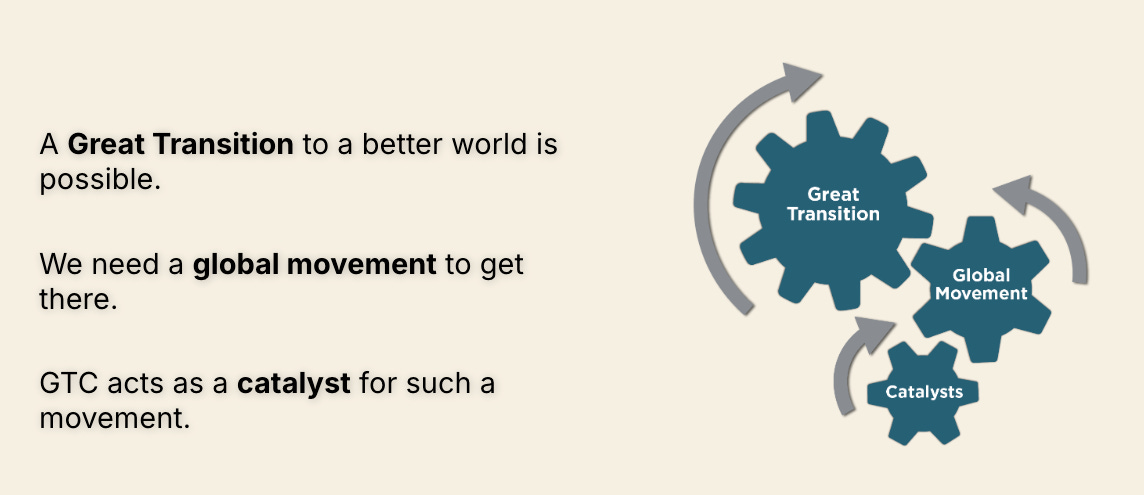
Screenshot från Great Transition Campaign
Great Transition Initiative was transformed into the Great Transition Campaign in 2025 with the goal of supporting the emergence of a global citizen movement that can address the polycrisis and create a “just, sustainable, and peaceful world.” This should not be a single organization but a “polycentric ecology” consisting of “innumerable movements, organizations, and associations gathered under a broad umbrella of inclusive solidarity and shared vision.”18
The question is who will take the place as its leader?
Unfortunately, it is a constructed and controlled opposition that Raskin has in mind, where largely the same forces that are building the tyranny will be pulling the strings. Behind the movement we find, as usual, the network of philanthropic organizations that have controlled much of the development of the world since the beginning of the 20th century.
The concept is reminiscent of Orwell’s 1984 where the “opposition leader” Emmanuel Goldstein turns out to be created by Big Brother. The resistance is constantly led back to the starting point and, as Raskin indicates in the Fortress World scenario, the tyranny may persist for half a century before some form of freedom returns.
It is also clear that the “AI beast” that Trump and his Techno-Kings are constructing is ultimately intended to be coupled with renewed sustainability commitments. The result, if this was to succeed, would be a global technocracy. That is also the end goal of the agenda I describe in The Digital World Brain.
So buckle up, the Beast is yet to come!
On a Personal Note
In last year’s New Year’s Letter I wrote that I wished that my books would be published in more languages (including Spanish). After only a couple of months, a Spanish publisher got in touch and Rockefeller has now been translated into Spanish. It was also published in Greek, while Italian and Japanese editions are in the works.
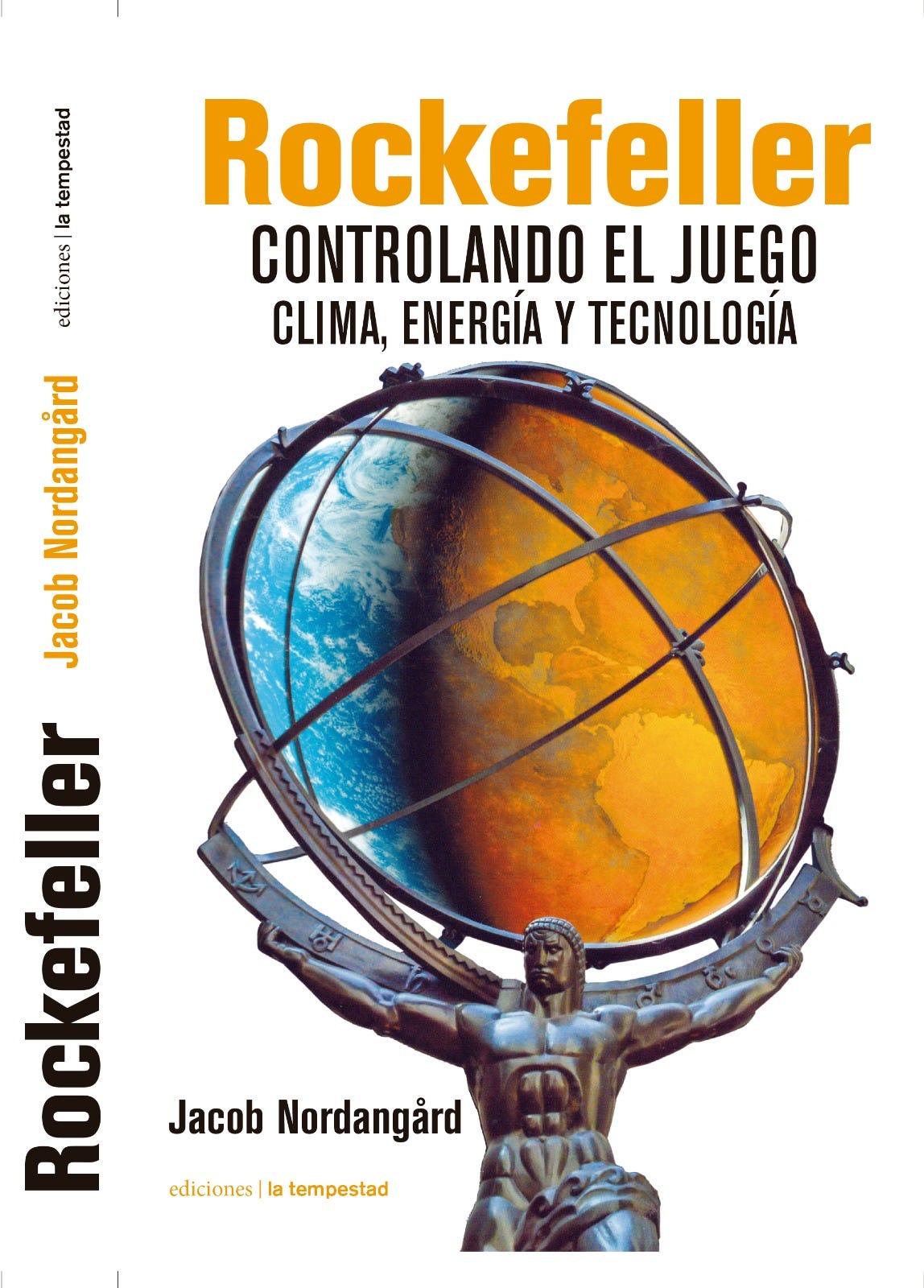
In March, my wife Inger and I traveled to Spain to participate in the Brownstone Institute retreat, where I was one of the speakers. In Barcelona, we also had the opportunity to meet the Spanish publisher and translators.
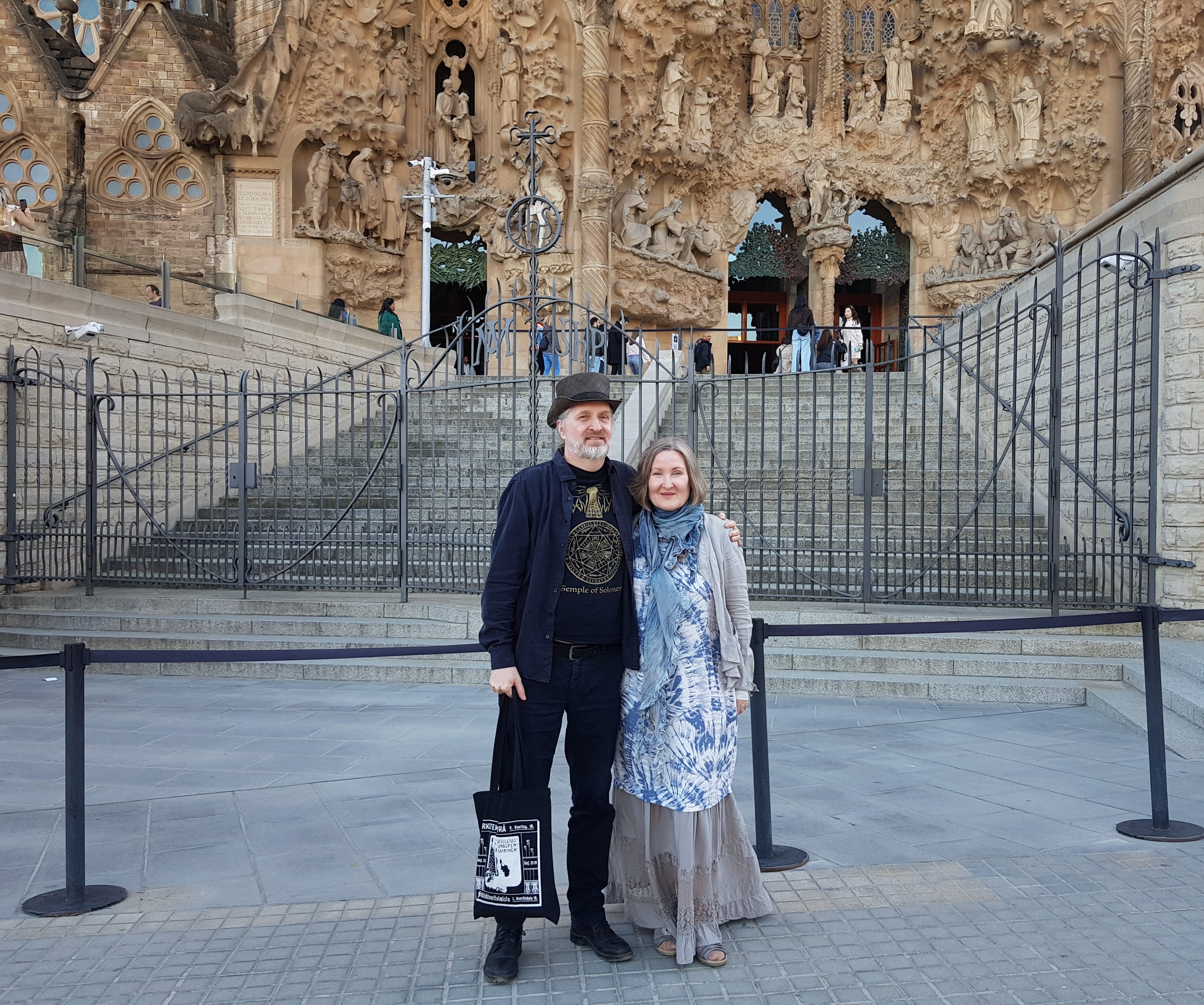
Me and Inger in front of the Sagrada Família cathedral in Barcelona
In October, I participated in the Omniwars online symposium along with Patrick M. Wood, David A. Hughes, Dâniel Broüdy and Courtenay Turner.
This year, it is my desire to have a greater impact for my books in the US (perhaps through participation in some major alternative channel) to help spread awareness of what is being planned. When enough people see through the game, understand how power operates, and stop falling into the false Right-Left dichotomy trap, the propaganda and manipulation tactics no longer work.
The English and German versions of The Digital World Brain are coming soon. We will also soon publish the updated list of WEF’s Young Global Leaders that Inger worked with during the autumn and is just finishing. She may also contribute with some additional articles (if granted enough screen time from our hyperactive baby-boss kitten).

Gullan, the baby-boss kitten.
Please support our work by becoming a paid subscriber and much gratitude to those of you who already are.
Regeringskansliet (2025), Regeringen vill ge polisen rätt att använda AI för ansiktsigenkänning i realtid
Regeringskansliet (2024), Avtal om försvarssamarbete med USA, regeringen.se/regeringens-politik/militart-forsvar/avtal-om-forsvarssamarbete-med-usa-dca/
U.S. Department of State, America Welcomes a New G20,


Leave a Reply